
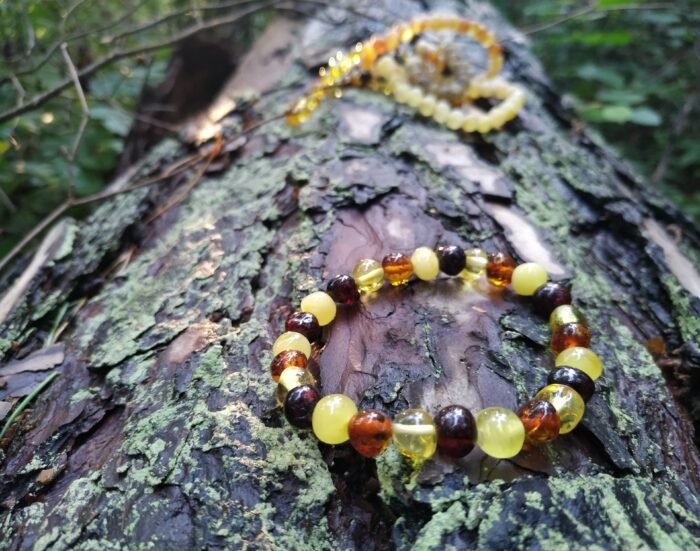
Baltic Amber Quality Grades: A Connoisseur’s Guide to Authenticity
What if the “rare” butterscotch necklace you’ve been eyeing is actually just meticulously heated plastic, devoid of the ancient vitality you seek? It’s a valid fear in a market where the Baltic region provides the vast majority of the world’s finest resin, yet sophisticated imitations are more prevalent than ever. You likely feel the pull toward amber’s warmth but hesitate because the difference between various Baltic amber quality grades isn’t always clear to the naked eye. It’s frustrating to face a price tag of €100 or more without knowing if you’re holding a natural treasure or a reconstructed substitute.
By mastering these standards, you can move past the confusion of “pressed” versus “natural” stones. This guide promises to transform you into a true connoisseur, capable of identifying high-potency succinite that offers both aesthetic brilliance and holistic benefits. We’ll explore the official standards of the International Amber Association, the vital role of succinic acid, and the specific markers that define a piece’s true value. You’ll gain the clarity needed to select pieces that resonate with your spirit and stand the test of time.
Key Takeaways
- Identify the unique geological markers of Lithuanian succinite that set it apart as the world’s premier resin for beauty and vitality.
- Navigate the complexities of Baltic amber quality grades by evaluating color, clarity, and the rare presence of ancient botanical inclusions.
- Protect your investment by learning to distinguish between natural, unheated amber and common market substitutes like copal or pressed resins.
- Select the right grade for your specific needs, whether you’re seeking the soothing properties of succinic acid for kids necklaces or high-carat precious jewelry.
- Gain the artisan’s perspective on how transparency levels, from clear honey to opaque bone, influence both the spirit and the price of a piece.
Table of Contents
- Understanding the Spectrum of Baltic Amber Quality Grades
- The Four Pillars of Amber Grading: Color, Clarity, Cut, and Carat
- Authentic vs. Synthetic Amber: How Grading Protects Your Investment
- Evaluating Rarity: The Role of Inclusions and Succinic Acid
- Choosing the Right Grade for Your Amber Grande Collection
Understanding the Spectrum of Baltic Amber Quality Grades
Baltic amber isn’t a cold mineral born of pressure and darkness. It’s a warm, living history. Often called the “Gold of the North,” this fossilized resin captures the essence of prehistoric forests from 40 million years ago. To truly appreciate its value, you must understand the hierarchy of Baltic amber quality grades. This isn’t just about aesthetics. It’s about the stone’s journey from a sticky, golden liquid to a hardened gem that carries the sun’s warmth within it.
The grading system moves from common, “pressed” varieties to rare, museum-quality pieces. At the entry level, you find reconstructed stones made from fragments. At the pinnacle, you find large, clear specimens or those containing rare flora and fauna. Every step up this ladder represents a greater rarity and a stronger connection to the prehistoric world. Choosing the right grade ensures that your piece, whether it’s for wellness or elegance, possesses the authentic spirit of the Baltic.
What Defines a “Grade” in Organic Gemstones?
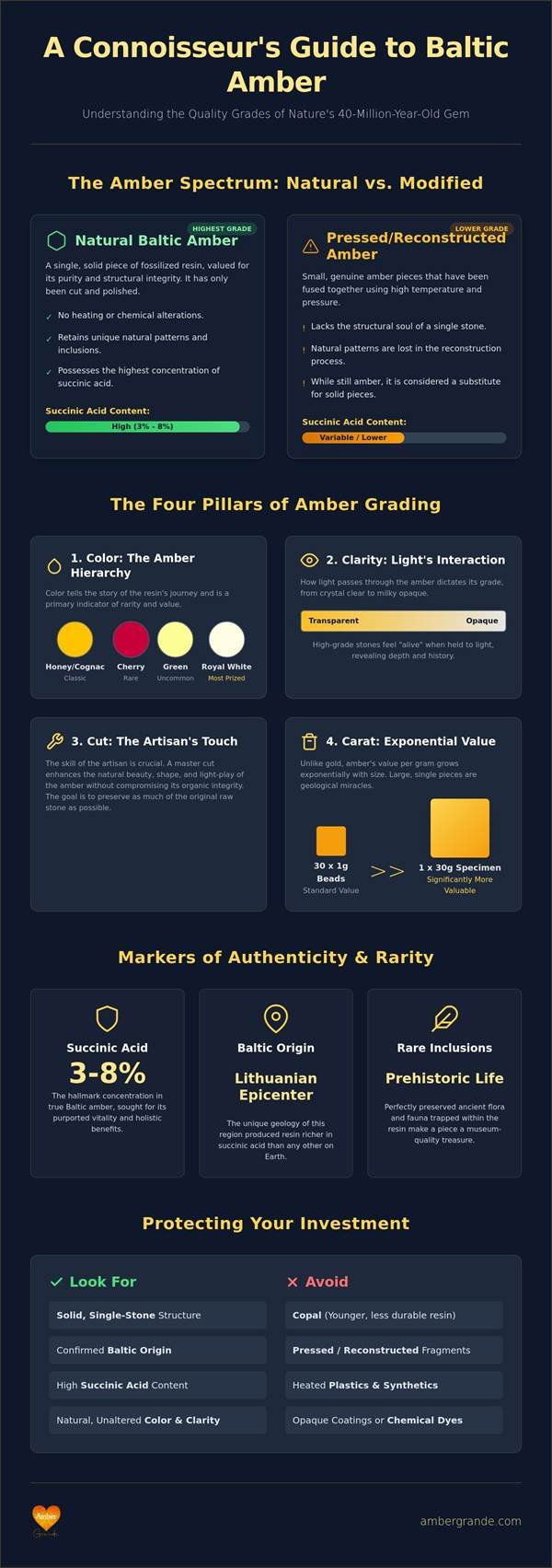
Unlike diamonds or rubies, amber is organic. Its quality starts with physical integrity. The highest Baltic amber quality grades belong to “natural” stones. These are solid pieces that have only been cut and polished, never heated or chemically altered. They retain the highest concentration of succinic acid, typically between 3% and 8%. This chemical compound is the hallmark of true Baltic succinite, often sought for the vitality it brings to the wearer.
Visual appeal also dictates the grade. We look at how light interacts with the resin. Is it transparent like honey, or opaque like ancient bone? A high-grade stone should feel “alive” when held to the light. Lower grades often include “pressed” amber, where small pieces are fused together. While these are still real amber, they lack the structural soul and unique patterns found in a single, solid stone. For those selecting kids necklaces or adult necklaces, knowing the difference between a solid stone and a reconstructed one is vital for both durability and peace of mind.
The Heritage Factor: Why Baltic Origin Matters
The Baltic Sea region, especially around Lithuania, is the heart of the amber world. This isn’t just a matter of geography; it’s a matter of geological destiny. The specific conditions of Baltic amber formation during the Eocene epoch created a resin richer in succinic acid than any other variety on Earth. This unique composition is why Baltic specimens are prized above those from the Dominican Republic or Mexico.
Lithuanian craftsmanship plays a crucial role in preserving this quality. For centuries, the Amber Road connected our shores to the Roman Empire, trading this “gold” for silver and silk. Today, our artisans honor that lineage. They understand that the “spirit” of the work lies in respecting the material’s natural state. By choosing amber of confirmed Baltic origin, you’re supporting a heritage that has flourished for millennia. It’s a commitment to authenticity that ensures your precious jewelry isn’t just a beautiful accessory, but a piece of Lithuanian history you can hold in your hand.
The Four Pillars of Amber Grading: Color, Clarity, Cut, and Carat
Understanding Baltic amber quality grades requires looking beyond the surface. It’s a dance between nature’s millions of years and the artisan’s steady hand. We evaluate these treasures through four specific lenses: Color, Clarity, Cut, and Carat. While traditional gemstones follow strict industrial rules, amber grading is more organic. It rewards the soul of the stone. For those investing in precious jewelry, the weight and integrity of a solid stone are the first indicators of its heritage status.
Size changes everything in the Baltic market. Unlike gold, where the price per gram stays relatively stable, amber’s value grows exponentially with weight. A single, solid 30-gram specimen is significantly more valuable than thirty individual 1-gram beads. This is because finding large, inclusion-free pieces that survived the shifting earth is a geological miracle. When you hold a heavy, high-grade piece, you aren’t just holding resin. You’re holding a rare survivor of an ancient world.
The Color Hierarchy: From Honey to Cherry
Color tells the story of the resin’s journey. Honey and cognac hues are the beloved classics, radiating a familiar warmth that most people associate with the Baltic. However, “Royal White” amber sits at the top of the rarity scale. Historically reserved for nobility, its creamy, opaque texture is caused by millions of microscopic air bubbles trapped within. You’ll also see deep cherry or rare greens. Be cautious with vibrant greens; these are often achieved through modern thermal treatments in an autoclave rather than natural geological pressure. Genuine green amber is subtle, earthy, and exceptionally rare in Lithuania’s artisan markets.
Transparency vs. Cloudiness
Don’t assume that clear stones are always superior. In the world of amber, “bone” or “milky” varieties are often more prized due to their high succinic acid content and rarity. Transparent amber allows you to see deep into the stone’s heart, sometimes revealing “sun spangles.” These are tiny, circular fractures that catch the light like glitter. While beautiful, large spangles can sometimes be a sign of heat treatment used to “clarify” a cloudy stone. A connoisseur looks for the balance between natural cloudiness, often called “bastard” amber, and the clarity that allows the stone to glow from within.
Finally, we look at the cut. A master artisan doesn’t just shape the stone; they listen to it. The goal is to maximize light refraction without sacrificing the stone’s natural “skin” or weight. A poorly executed cut can dull the natural luster, while a skilled one brings out the hidden fire. Whether it’s the smooth curves of beads for kids bracelets or the sharp facets of a statement pendant, the cut is the final signature of quality. It’s the bridge between raw nature and refined elegance.
Authentic vs. Synthetic Amber: How Grading Protects Your Investment
Finding a piece that resonates with your spirit is only half the journey. The other half is ensuring that your treasure is a genuine product of the Earth. In the market, Baltic amber quality grades act as a shield for your investment. They help you navigate the murky waters where high-quality heritage pieces sit alongside clever imitations. Whether you’re looking for kids necklaces or adult necklaces, the grade tells you if you’re buying a million-year-old fossil or a modern synthetic. Professional grading is the only way to be certain that the stone contains the succinic acid required for true wellness jewelry.
Beyond the natural variations, we often encounter “Copal.” This is a younger tree resin, often just a few thousand to a million years old. It lacks the hardness and the potent chemical signature of true Baltic succinite. It’s much softer and can even melt or become sticky if handled too much. Then there are the outright fakes: phenolic resins, glass, and modern plastics. These materials may look the part, but they lack the organic warmth and the unique energetic vibration that defines authentic amber. They’re cold to the touch and offer none of the historical or holistic value of the real stone.
Natural vs. Pressed: The Hidden Grade
This is a nuance many buyers miss. Both “Natural” and “Pressed” (reconstructed) amber are technically made from real Baltic resin. However, they occupy very different rungs on the quality ladder. Natural amber is a single, solid stone. It’s the gold standard of authenticity. Pressed amber is created by fusing small fragments together under high heat and pressure. While it is real amber, the process often alters the natural structure and can diminish its value. You can often spot these reconstructed pieces by looking for “flow lines.” These are small, swirling patterns where the fragments met during the pressing process. Solid stones maintain a more chaotic, organic internal world that hasn’t been forced into a mold.
Essential Authenticity Tests for Buyers
- The Saturated Salt Water Test: Real amber is surprisingly light. In a glass of water with about three tablespoons of dissolved salt, genuine amber will float. Plastic and glass will sink like stones because they’re far denser than organic resin.
- The Static Test: Rub the stone vigorously against a piece of wool or silk for 20 seconds. Authentic amber becomes electrostatically charged; it’ll pick up small bits of paper or hair. Most plastics won’t react with the same intensity.
- The Rub Test: This is the most sensory method. Warm the stone by rubbing it in your palms until it heats up. It should release a faint, pleasant scent of pine or resin. Synthetics will either smell like burnt chemicals or have no scent at all.
By using these tests and understanding the hierarchy of grades, you protect the integrity of your collection. You aren’t just buying a bead; you’re preserving a piece of Lithuanian heritage. Don’t settle for “amber-like” when you can have the genuine spirit of the North.
Evaluating Rarity: The Role of Inclusions and Succinic Acid
True rarity in the Baltic world isn’t always found in flawless transparency. Sometimes, the highest Baltic amber quality grades are awarded to stones that contain a messy, prehistoric story. We look at inclusions; tiny windows into the Eocene epoch; and the concentration of succinic acid to determine a piece’s spiritual and physical worth. While a clear stone is beautiful, a stone that carries ancient life or a thick, acid-rich cortex offers a different level of connection to the Earth’s history. These “imperfections” are the fingerprints of nature, proving that your piece has remained untouched by synthetic labs for millions of years.
The “spirit” of a stone is often found in these unique characteristics. A connoisseur understands that a perfectly clear, mass-produced bead lacks the soul of a raw, inclusion-rich specimen. In 2026, the market has seen a surge in demand for these organic markers. Collectors aren’t just looking for jewelry; they’re looking for a fragment of the past that resonates with their own journey toward vitality. This shift toward naturalism has redefined what we consider “top grade,” placing a higher value on the stone’s original, raw state.
The World Within: Grading Inclusions
Inclusions are nature’s time capsules. When grading these pieces, we look at both the rarity of the trapped organism and the clarity of its preservation. Common inclusions like gnats, flies, or bits of oak moss are beautiful and accessible. However, rare finds like feathers, lizards, or specific prehistoric blossoms can elevate a stone to museum-grade status. The position of the inclusion matters too; it should be visible enough to be admired without compromising the stone’s structural integrity. Inclusion Grade is a measure of biological rarity and visual accessibility.
Wellness Grading: Succinic Acid Content
For many, the true value of Baltic amber lies in its “healing grade,” which is dictated by succinic acid. This natural compound is most concentrated in the “cortex” or the outer layer of the raw stone. When amber is heavily polished to a high-gloss finish, some of this beneficial layer is removed. This is why raw or “semi-polished” beads are often preferred for wellness needs, particularly for kids necklaces and bracelets. The warmth of the skin helps release these trace amounts, fostering a sense of inner peace and balance.
We’ve found that the synergy between amber and other natural elements can amplify these benefits. By combining the traditional potency of Lithuanian succinite with the focused energy of earth-born minerals, you create a piece that serves both the body and the spirit. If you’re looking to deepen your holistic practice, you can explore our specialized Amber and Crystals collection to find a grade that aligns with your personal wellness goals. Whether you choose a raw, high-acid piece for vitality or a rare inclusion for its historical lineage, you’re participating in a tradition that spans forty million years.
Choosing the Right Grade for Your Amber Grande Collection
Selecting the perfect piece is about aligning your intention with the stone’s energy. Now that you understand the intricacies of Baltic amber quality grades, you can choose with confidence. It’s about finding the balance between the raw power of nature and the refined beauty of artisan craft. Whether you’re seeking a gentle companion for a child or a sophisticated heirloom for yourself, the grade you select should reflect the purpose it will serve in your life. Intention matters. When you choose a piece for a child, you’re often looking for the soothing embrace of the Earth’s ancient resin, which is why raw, unpolished beads are such a popular choice.
Buying amber online in 2026 requires a discerning eye. Look for detailed descriptions that specify whether the stone is natural or reconstructed. Authentic Lithuanian boutiques will always be transparent about these details. Trust your intuition when viewing the textures and colors. A high-quality grade will have a depth and warmth that fakes simply cannot replicate. By prioritizing heritage and authenticity, you ensure that your investment supports traditional craftsmanship while bringing genuine vitality into your home.
Matching Grade to Purpose
Daily wear pieces should be durable yet soul-stirring. For Kids Necklaces and Kids Bracelets, we recommend “Grade A” raw or semi-polished beads. These retain the highest concentration of succinic acid, which is released by the warmth of the skin. They’re designed for life’s little moments, offering a grounded connection to nature. For adults, Adult Necklaces and Precious Jewelry often lean toward higher clarity or rare color variations like Royal White or deep Cognac. These heirloom-quality pieces are meant to be passed down through generations, carrying your story within their golden depths.
If you’re seeking a more complex energetic profile, our Amber And Crystals Collection offers a unique synergy. By pairing specific Baltic amber quality grades with the focused vibrations of earth-born crystals, we create jewelry that balances both aesthetic beauty and spiritual harmony. It’s a modern way to wear ancient wisdom, perfect for those who view their jewelry as a partner in their wellness journey.
The Amber Grande Quality Promise
We believe that every piece of amber should be as unique as the person wearing it. Our commitment to authentic, Lithuanian-sourced Baltic amber ensures that you receive only the finest succinite, harvested and polished with respect for its 40-million-year lineage. We carefully curate each collection to ensure maximum vibrancy and structural integrity. You aren’t just a customer to us; you’re a participant in a shared journey toward elegance and peace. We invite you to Discover our collection of handcrafted, authentic Baltic amber jewelry and find the piece that speaks to your spirit today.
Embrace the Timeless Spirit of Lithuanian Amber
You now possess the wisdom to distinguish a true geological marvel from a common imitation. By understanding the nuances of Baltic amber quality grades, you’ve moved beyond being a consumer to becoming a true participant in this ancient heritage. You know that whether it’s the milky depth of Royal White or the raw energy of a high-acid cortex, every stone tells a story of forty million years. This knowledge protects your investment and ensures that the piece you choose resonates with your personal journey toward wellness and elegance.
We invite you to honor this connection through our handcrafted artisan pieces. Our specialized wellness collections and precious jewelry are born from a deep respect for our authentic Lithuanian heritage. Every bead and facet is a testament to the spirit of the Baltic. Explore the Amber Grande Collection of Authentic Baltic Jewelry to find a treasure that brings balance and vitality to your life. Your journey with the Gold of the North is just beginning, and we’re honored to be your guide.
Frequently Asked Questions
What is the highest quality grade of Baltic amber?
The highest quality grade is Natural Baltic Amber (Succinite) that has undergone only mechanical treatment like grinding, cutting, or polishing. This grade ensures the stone’s physical properties and chemical composition remain completely unaltered. Because it’s a solid, single stone from the Earth, it retains the maximum amount of succinic acid and the unique energetic vibration that connoisseurs seek for both investment and wellness.
Is cloudy amber less valuable than transparent amber?
Cloudy amber is often more valuable than transparent varieties because of its rarity and high succinic acid content. Specifically, “Royal White” or “Bone” amber is highly prized in Lithuania and international markets. The cloudiness is caused by millions of tiny air bubbles trapped during fossilization. While clear honey amber is classic, the unique textures found in opaque Baltic amber quality grades often command a higher price.
How can I tell the difference between authentic and synthetic amber at home?
You can use the saltwater test by dissolving about three tablespoons of salt in a glass of water. Authentic amber will float, while most plastics and glass imitations will sink immediately. Another reliable method is the scent test. If you rub the stone vigorously against your palm until it warms up, it should release a faint, pleasant smell of pine resin. Synthetics usually smell of chemicals or nothing at all.
Does the color of the amber affect its healing properties or quality?
Color primarily dictates rarity and aesthetic value, but it does correlate with succinic acid levels. Opaque and milky varieties often contain a higher concentration of this beneficial compound compared to highly clarified transparent stones. While all genuine Baltic amber provides holistic benefits, choosing a grade with a visible “cortex” or a more natural, unheated color ensures you’re receiving the most potent vitality from the stone.
What is “Pressed Amber” and is it considered high quality?
Pressed amber, also known as reconstructed amber, consists of small fragments fused together under high temperature and pressure. While it’s technically real Baltic resin, it sits at a lower rung of Baltic amber quality grades compared to natural stones. It’s often used for more affordable jewelry, but it lacks the structural integrity and unique internal world of a single, solid specimen that has remained untouched for millions of years.
Why is Baltic amber more valuable than amber from other regions?
Baltic amber is uniquely valuable because it contains a high concentration of succinic acid, typically ranging from 3% to 8%. Other resins, like Dominican or Mexican amber, lack this specific chemical signature. Additionally, the 40 million year fossilization process in the Baltic region creates a harder, more durable gem. This combination of geological age and chemical potency makes it the gold standard for both collectors and wellness practitioners.
Do inclusions always make an amber piece more expensive?
Inclusions generally increase a piece’s value, but the final price depends on the rarity and clarity of what’s trapped inside. A common gnat or bit of oak moss adds a modest premium, while rare fauna like a lizard, a feather, or an intact prehistoric blossom can push the price into the thousands of euros. The visual accessibility of the inclusion within the stone also plays a significant role in its final grading.
How does the grade of amber affect the price of kids necklaces?
The price for kids necklaces is influenced by whether the beads are “Natural” solid stones or “Pressed” fragments. Natural, raw beads are often more expensive because they require larger pieces of high quality rough amber to produce and they retain more succinic acid. While polished beads are beautiful, many parents in Lithuania prioritize raw grades for their potent wellness properties, even if they carry a slightly higher artisan price point.
Ancient Glow, Modern Vitality: The Ultimate Guide to Amber Wellness Jewelry
Amber is not a gemstone; it is a living, bio-active resin that acts as a natural transmitter of vitality the moment it touches your skin. You’ve likely felt a pull toward something more meaningful than mass-produced accessories. Perhaps you’re seeking relief from persistent joint discomfort. It’s common to feel overwhelmed by the sea of imitations, but finding authentic amber wellness jewelry is about reconnecting with a tradition that has flourished on the Baltic coast for millennia.
We understand that you want jewelry with a purpose that goes beyond simple decoration. This guide promises to show you how handcrafted Baltic amber serves as a bridge between ancient heritage and your modern holistic lifestyle. You’ll learn the science behind succinic acid, which typically makes up 3% to 8% of genuine Baltic amber. We’ll also provide the clarity you need to distinguish real resin from plastic imitations using standards from the Lithuanian Assay Office. From understanding market trends to choosing your first artisan piece, we’re here to guide you toward a life of balanced, natural vitality.
Key Takeaways
- Understand why authentic Baltic amber is a living resin rather than a mineral stone and how its ancient lineage offers a natural bridge to modern well-being.
- Discover how amber wellness jewelry works through transdermal absorption, releasing succinic acid to support your body’s internal balance and vitality.
- Learn to identify the powerful synergy between organic amber and natural gemstones to enhance both your physical comfort and spiritual peace.
- Explore dedicated collections for every stage of life, including safety-conscious kids necklaces and sophisticated pieces designed for the modern adult.
- Gain the confidence to distinguish genuine Lithuanian amber from common synthetics using simple, reliable authenticity tests at home.
Table of Contents
- The Essence of Amber Wellness Jewelry: More Than Just an Accessory
- How Baltic Amber Interacts with the Body: The Role of Succinic Acid
- Synergizing Energy: Combining Baltic Amber with Natural Crystals
- Wellness for All Ages: From Kids’ Support to Adult Vitality
- Finding Authenticity: How to Source Genuine Amber Wellness Jewelry
The Essence of Amber Wellness Jewelry: More Than Just an Accessory
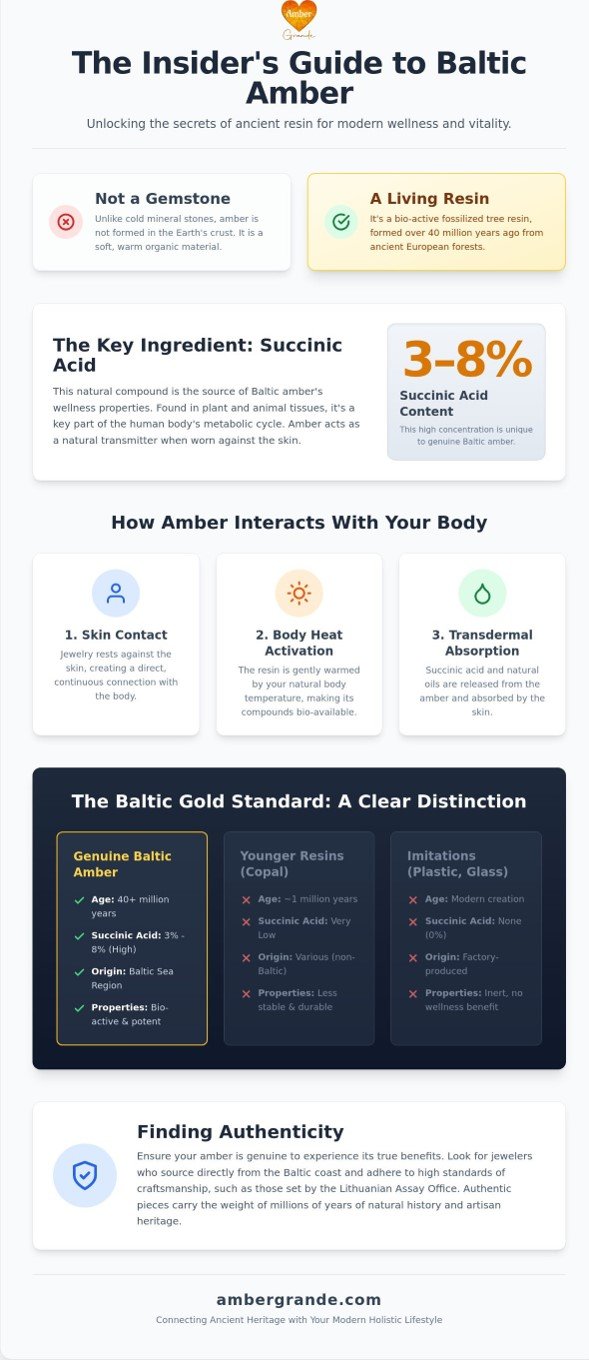
When you touch a piece of authentic Baltic amber, you aren’t just holding a stone. You’re holding a warm, living fragment of history. Unlike cold, mineral gemstones like quartz or diamonds that formed deep within the earth’s crust, Baltic amber is fossilized tree resin, scientifically classified as succinite. It’s an organic material that remains chemically active, reacting to the environment and the person wearing it. This is why the term amber wellness jewelry is so significant; it describes a functional relationship between the wearer and the ancient forest’s lifeblood.
This organic interaction is what defines wellness jewelry. When the resin rests against your skin, it warms up, allowing the natural oils and succinic acid within to become bio-available. The distinction between this and younger resins, such as copal, is vital for anyone seeking genuine results. Copal is often sold as “young amber,” but it’s only a few thousand years old and lacks the durability and high succinic acid concentration found in true Baltic specimens. Genuine Baltic amber has survived for millions of years, maturing into a stable yet potent tool for holistic balance.
From Ancient Resin to Modern Holistic Tool
The story of this resin began 40 million years ago in the Eocene forests of Northern Europe. As ancient pines released their golden sap, it trapped the energy of the sun and the essence of the forest before being swept into the Baltic Sea. For centuries, coastal communities used this “Gold of the North” in traditional folk medicine. They believed it could ward off fatigue and soothe the spirit. This evolution from a raw medicinal ingredient to intentional, modern jewelry reflects our collective desire to return to nature. We’ve moved beyond purely decorative pieces to embrace accessories that serve our internal state as much as our outward style.
The Baltic Sea Heritage: The World’s Gold Standard
Origin is everything. While resins like copal exist in other parts of the world, they lack the geological maturity and succinic acid concentration found in the Baltic region. True Baltic amber contains between 3% and 8% succinic acid, a level that sets it apart as the global gold standard for wellness applications. Lithuania remains the heart of this artisan tradition. Here, the craft is passed down through families who understand the delicate balance of preserving the resin’s natural properties while polishing it for elegance. Amber Grande honors this heritage by sourcing authentic material directly from the Baltic coast, ensuring every piece of amber wellness jewelry carries the professional authority of Lithuanian craftsmanship and the spiritual warmth of an artisan’s touch.
How Baltic Amber Interacts with the Body: The Role of Succinic Acid
The true magic of Baltic amber lies in its chemical composition. While many admire its golden hues, the real value for well-being is found in a substance called succinic acid. This natural compound is what elevates amber wellness jewelry from a simple accessory to a functional holistic tool. Unlike mineral stones that remain inert, Baltic amber is bio-active. When it rests against your skin, it doesn’t just sit there; it begins a subtle, rhythmic interaction with your body’s own biology.
The Science of Succinic Acid in Amber
Authentic Baltic amber is uniquely rich in succinic acid, typically containing between 3% and 8% of this active ingredient. This concentration is significantly higher than what is found in amber from other regions. Succinic acid is a natural constituent of plant and animal tissues used for energy production. Within the human body, it plays a role in the citric acid cycle, helping to support metabolic function and acting as a natural alkalizer. By wearing this resin, you’re keeping a source of this metabolic supporter in constant proximity to your largest organ: your skin.
It’s important to remain grounded when discussing these benefits. While many cherish amber for its traditional uses, we must be careful to avoid making unsubstantiated health claims that position jewelry as a medical cure. Instead, we view amber as a supportive partner in a broader wellness lifestyle. It’s a natural transmitter that works in harmony with your body to encourage a state of balance and inner peace.
Skin Contact and the “Warmth” Factor
For amber wellness jewelry to be effective, direct skin contact is essential. Amber is often described as a “warm” stone. If you hold a piece of amber in one hand and a piece of quartz in the other, the amber will immediately feel closer to your own body temperature. This natural warmth is the catalyst. As your skin temperature (averaging around 36.6°C) warms the resin, it triggers the release of microscopic amounts of essential oils containing succinic acid. These oils are then absorbed transdermally into the bloodstream.
- Raw vs. Polished: Raw and polished Baltic amber both contain the natural characteristics that make amber so unique. Raw amber has a more natural, textured appearance, while polished amber offers a smooth, glossy finish. The best choice depends on your personal style and preference.
- Consistency: The benefits are cumulative. Wearing your piece daily allows for a steady, gentle interaction with your system.
- Vitality: Long-term wear contributes to a sustained sense of vitality and groundedness.
Whether you’re looking for support during a busy workday or a gentle way to soothe a restless child, the mechanism remains the same. The resin reacts to you, and you react to the resin. If you’re ready to experience this ancient connection for yourself, you can explore our collection of handcrafted adult necklaces designed to bring this natural vitality into your daily routine.
Synergizing Energy: Combining Baltic Amber with Natural Crystals
While the bio-active properties of resin provide a grounded foundation for vitality, the addition of natural gemstones introduces a new dimension of balance. This intentional blending is the driving philosophy behind our Amber and Crystals collection. We view these pieces not as mere ornaments, but as sophisticated tools where the organic warmth of the forest meets the stable, mineral vibrations of the earth. By weaving these materials together, we create a balanced wellness field that addresses both the physical and the spiritual aspects of your daily life.
Natural gemstones act as amplifiers for the succinic acid release discussed earlier. While the amber works transdermally to support your body’s natural rhythm, the crystals provide a focused energetic resonance. This combination ensures that your amber wellness jewelry is working on multiple levels simultaneously. It’s a holistic approach that honors the complexity of the human experience, offering a sense of peace that is both felt and seen.
Popular Crystal and Amber Pairings
Every pairing in our collection is curated with a specific intention in mind. We select stones that naturally harmonize with the resin’s organic spirit to create a cohesive experience for the wearer.
- Amber and Amethyst: This is a favorite for those seeking a sanctuary from a busy world. Amethyst brings a sense of spiritual peace and mental clarity, perfectly balancing the physical vitality encouraged by Baltic amber.
- Amber and Rose Quartz: Focused on the emotional heart, rose quartz nurtures a sense of self-love and compassion. When paired with amber, it creates a soft, supportive energy that encourages emotional resilience.
- Amber and Turquoise: This vibrant combination is often chosen for protection. Turquoise is traditionally associated with clear communication and shielding, making it a powerful partner for the grounding nature of fossilized resin.
Choosing Your Wellness Synergy
Selection is an intuitive process. We encourage you to start by identifying your current wellness goals. If you’re navigating a period of high stress, the calming influence of amethyst might be the right choice. If you’re looking to foster deeper connections, rose quartz could be your guide. Regardless of the stone you choose, the quality of the materials is paramount. Synthetic or “aura” treated stones often lack the structural integrity required for genuine resonance.
At Amber Grande, our approach to crafting precious jewelry centers on the purity of the source. We use only high-quality, natural crystals to ensure that each handcrafted piece retains its authentic spirit. This commitment makes our jewelry a meaningful gift for yourself or a loved one, serving as a lasting reminder of the journey toward inner peace and physical balance.
Wellness for All Ages: From Kids’ Support to Adult Vitality
The beauty of Baltic amber is that it doesn’t belong to a single generation. It is a companion for the entire family. Whether it’s a toddler navigating the milestones of early growth or an adult managing the pressures of a fast-paced career, amber wellness jewelry provides a gentle, constant connection to the earth’s ancient energy. In Lithuania, we’ve long understood that this resin is a versatile tool. It’s as much a part of a child’s nursery as it is a professional’s wardrobe, serving as a silent partner in the pursuit of daily balance.
Nurturing the Little Ones: Kids Amber Jewelry
We believe safety is the foundation of every piece we create for children. When you’re selecting Kids Necklaces, the technical details matter as much as the quality of the amber itself. Every bead in our collection is individually knotted by hand. This means that in the unlikely event the string should break, only a single bead is released rather than the entire strand. We also utilize specialized breakaway safety clasps designed to pop open if any significant tension is applied. These features ensure our jewelry meets rigorous European safety standards, such as EN71-1, allowing parents to focus on the nurturing environment they’re building for their little ones.
For particularly active toddlers, Kids Bracelets worn as anklets under socks are a popular alternative. This ensures the amber remains in direct contact with the skin while staying tucked safely away from curious hands. It’s about finding the rhythm that works best for your family’s lifestyle.
Elegant Wellness for Adults
The transition from childhood support to adult vitality is a natural one. Our Adult Necklaces move beyond the utilitarian image to become sophisticated pieces of art. For women, amber offers a warm radiance that complements both casual wear and professional attire. It’s a way to carry the spirit of the forest into the office, helping to maintain a sense of calm amidst a busy schedule. For men, we focus on rugged, unpolished, or dark honey tones that emphasize a natural, grounded aesthetic. These pieces aren’t just decorative; they’re intentional tools for strength and spirit. By integrating amber wellness jewelry into your daily routine, you’re choosing a lifelong companion that supports your well-being with every breath you take.
Discover the perfect piece for every member of your family by exploring our full Adult Necklaces collection today.
Finding Authenticity: How to Source Genuine Amber Wellness Jewelry
The search for genuine amber wellness jewelry often leads through a maze of synthetic imitations. Mass-market platforms are frequently stocked with pieces made from plastic, glass, or even pressed copal. While copal is a natural resin, it hasn’t reached the geological maturity of true Baltic amber. It’s softer, younger, and lacks the structural integrity required for lifelong wear. Choosing an authentic piece is about more than just aesthetics; it’s about ensuring you receive the bio-active benefits that only millions of years of fossilization can provide.
In Lithuania, the “Lithuanian Artisan” label is more than a marketing term. It’s a mark of heritage and trust. Our craftsmen understand the spirit of the resin, working with sustainable Baltic deposits that respect the delicate ecosystem of our coastline. This commitment to ethics and quality ensures that your jewelry is a pure transmitter of vitality. By sourcing directly from the region, we preserve the traditional lineage that has made Baltic amber the gold standard for centuries.
The Saltwater and Scent Tests
You don’t need a laboratory to verify your amber. A few simple home tests can provide peace of mind. The saltwater buoyancy test is one of the most reliable methods for raw beads. Mix one part salt with two parts warm water and stir until dissolved. Genuine Baltic amber will float on the surface, while plastic or glass imitations will sink immediately to the bottom. Remember to rinse your jewelry with fresh water afterward to maintain its natural glow.
The scent test is another traditional method. When you rub authentic amber vigorously against a piece of natural cloth, the friction generates heat. This should release a faint, pleasant scent of pine or forest resin. If the piece smells like burnt plastic or has no scent at all, it’s likely a synthetic substitute. Don’t be fooled by visual inclusions alone. While trapped insects or plant matter are fascinating, they can be easily faked in plastic molds. Focus on the physical properties of the resin itself to ensure you’re getting the real thing.
The Amber Grande Promise
We view ourselves as your artisan guide in this journey toward holistic well-being. By choosing a specialized boutique over a mass-market marketplace, you’re supporting a lineage of craftsmanship that values transparency and soul. Every piece in our collection is handcrafted with a deep respect for the material’s history and your personal wellness goals. We don’t just sell jewelry; we share a piece of our heritage with you.
We invite you to experience the difference that authentic, spiritually-informed craftsmanship makes. Whether you’re seeking a piece for yourself or a loved one, our collections are curated to provide both elegance and purpose. Ready to start your journey? Explore our Amber Wellness Collections and find the piece that resonates with your spirit today.
Step Into a Life of Radiant Balance
You’ve explored how the ancient forests of the Baltic coast provide more than just beauty. They offer a tangible connection to vitality through the release of succinic acid and the intentional pairing of natural gemstones. Choosing amber wellness jewelry is a commitment to your own rhythm and the well-being of your family. It’s about moving away from mass-produced imitations and embracing the nurturing spirit of handcrafted art.
At Amber Grande, we take pride in our Lithuanian heritage. Our specialized Amber and Crystals collections are designed to create unique synergies that support your spirit, home, and office. Every piece is handcrafted with love, ensuring that you receive the highest quality of authentic Baltic amber sourced directly from our shores. We invite you to find the piece that speaks to your soul and enhances your modern lifestyle.
Discover Your Artisan Amber Wellness Piece at Amber Grande
Your path toward inner peace and physical vitality is a personal one. We’re honored to be your guide along the way. Stay grounded in nature’s wisdom and let your inner light glow.
Common Questions About Amber Wellness Jewelry
How long does it take for amber wellness jewelry to start working?
Most people notice a difference within 24 to 48 hours of consistent skin contact. It’s not an instant fix but a cumulative process that relies on the steady warming of the resin against your body. This gradual interaction allows your system to absorb the succinic acid and reach a state of balance. For the best results, we recommend wearing your piece as consistently as possible during the day.
Can I wear my amber necklace in the shower or swimming pool?
You should always remove your jewelry before bathing or swimming. Harsh chemicals found in soaps, shampoos, and pool chlorine can damage the organic structure of the resin over time. These substances can coat the amber or block its microscopic pores, which prevents the natural oils from reaching your skin. Keeping your piece dry and away from detergents ensures its longevity and effectiveness.
What is the difference between raw amber and polished amber for wellness?
Raw amber is often preferred for wellness because its surface remains unsealed and porous. This allows for a more direct release of succinic acid when the resin is warmed by your skin. Polished amber is undeniably beautiful and still contains the same beneficial compounds, but the tumbling process can slightly reduce the rate of transdermal absorption. Both styles offer vitality, so your choice depends on whether you prefer an earthy or refined aesthetic.
Is it safe for my child to sleep while wearing an amber necklace?
No, children should never wear any jewelry while sleeping or when they aren’t under direct adult supervision. Safety is our primary concern, and we advise parents to remove necklaces and bracelets before every nap or bedtime. This practice follows European safety standards and ensures that the amber wellness jewelry remains a supportive tool during waking hours without any risk of entanglement during rest.
How do I clean and recharge the energy of my amber and crystal jewelry?
Clean your pieces using only lukewarm water and a soft, lint-free cloth. Avoid any jewelry cleaners or steam treatments as they are too aggressive for organic resin. To recharge the energetic resonance, you can place your jewelry in indirect sunlight for a short period or near a piece of selenite. Be careful to avoid intense, direct midday heat, which can make the amber brittle over time.
Does the color of the amber affect its wellness properties?
The specific hue, whether it’s honey, cognac, or cherry, doesn’t significantly change the succinic acid levels. However, the opacity of the resin can play a minor role. Milky or “butter” amber often contains a higher density of microscopic air bubbles, which some traditional artisans believe allows for a slightly more efficient release of oils. Ultimately, the most important factor is the authenticity of the Baltic origin rather than the specific shade.
Can I wear multiple amber pieces at once for better results?
Yes, wearing multiple pieces increases the total surface area of amber in contact with your skin. Many people choose to layer a necklace with a bracelet to maximize the cumulative release of succinic acid throughout the day. This layering doesn’t just enhance the wellness benefits; it also allows you to create a personalized aesthetic that combines different amber tones and crystal energies for a more comprehensive holistic experience.
How can I tell if my amber is from the Baltic region or elsewhere?
Authentic Baltic amber, or succinite, has a unique chemical signature that distinguishes it from younger resins like copal or amber from other continents. You can verify your amber wellness jewelry by checking for certification from a reputable body like the Lithuanian Assay Office. Additionally, genuine Baltic amber will pass the saltwater buoyancy test, floating in a saline solution while most plastic or glass imitations will sink immediately.
