Baltic Amber Quality Grades: A Connoisseur’s Guide to Authenticity

What if the “rare” butterscotch necklace you’ve been eyeing is actually just meticulously heated plastic, devoid of the ancient vitality you seek? It’s a valid fear in a market where the Baltic region provides the vast majority of the world’s finest resin, yet sophisticated imitations are more prevalent than ever. You likely feel the pull toward amber’s warmth but hesitate because the difference between various Baltic amber quality grades isn’t always clear to the naked eye. It’s frustrating to face a price tag of €100 or more without knowing if you’re holding a natural treasure or a reconstructed substitute.
By mastering these standards, you can move past the confusion of “pressed” versus “natural” stones. This guide promises to transform you into a true connoisseur, capable of identifying high-potency succinite that offers both aesthetic brilliance and holistic benefits. We’ll explore the official standards of the International Amber Association, the vital role of succinic acid, and the specific markers that define a piece’s true value. You’ll gain the clarity needed to select pieces that resonate with your spirit and stand the test of time.
Key Takeaways
- Identify the unique geological markers of Lithuanian succinite that set it apart as the world’s premier resin for beauty and vitality.
- Navigate the complexities of Baltic amber quality grades by evaluating color, clarity, and the rare presence of ancient botanical inclusions.
- Protect your investment by learning to distinguish between natural, unheated amber and common market substitutes like copal or pressed resins.
- Select the right grade for your specific needs, whether you’re seeking the soothing properties of succinic acid for kids necklaces or high-carat precious jewelry.
- Gain the artisan’s perspective on how transparency levels, from clear honey to opaque bone, influence both the spirit and the price of a piece.
Table of Contents
- Understanding the Spectrum of Baltic Amber Quality Grades
- The Four Pillars of Amber Grading: Color, Clarity, Cut, and Carat
- Authentic vs. Synthetic Amber: How Grading Protects Your Investment
- Evaluating Rarity: The Role of Inclusions and Succinic Acid
- Choosing the Right Grade for Your Amber Grande Collection
Understanding the Spectrum of Baltic Amber Quality Grades
Baltic amber isn’t a cold mineral born of pressure and darkness. It’s a warm, living history. Often called the “Gold of the North,” this fossilized resin captures the essence of prehistoric forests from 40 million years ago. To truly appreciate its value, you must understand the hierarchy of Baltic amber quality grades. This isn’t just about aesthetics. It’s about the stone’s journey from a sticky, golden liquid to a hardened gem that carries the sun’s warmth within it.
The grading system moves from common, “pressed” varieties to rare, museum-quality pieces. At the entry level, you find reconstructed stones made from fragments. At the pinnacle, you find large, clear specimens or those containing rare flora and fauna. Every step up this ladder represents a greater rarity and a stronger connection to the prehistoric world. Choosing the right grade ensures that your piece, whether it’s for wellness or elegance, possesses the authentic spirit of the Baltic.
What Defines a “Grade” in Organic Gemstones?
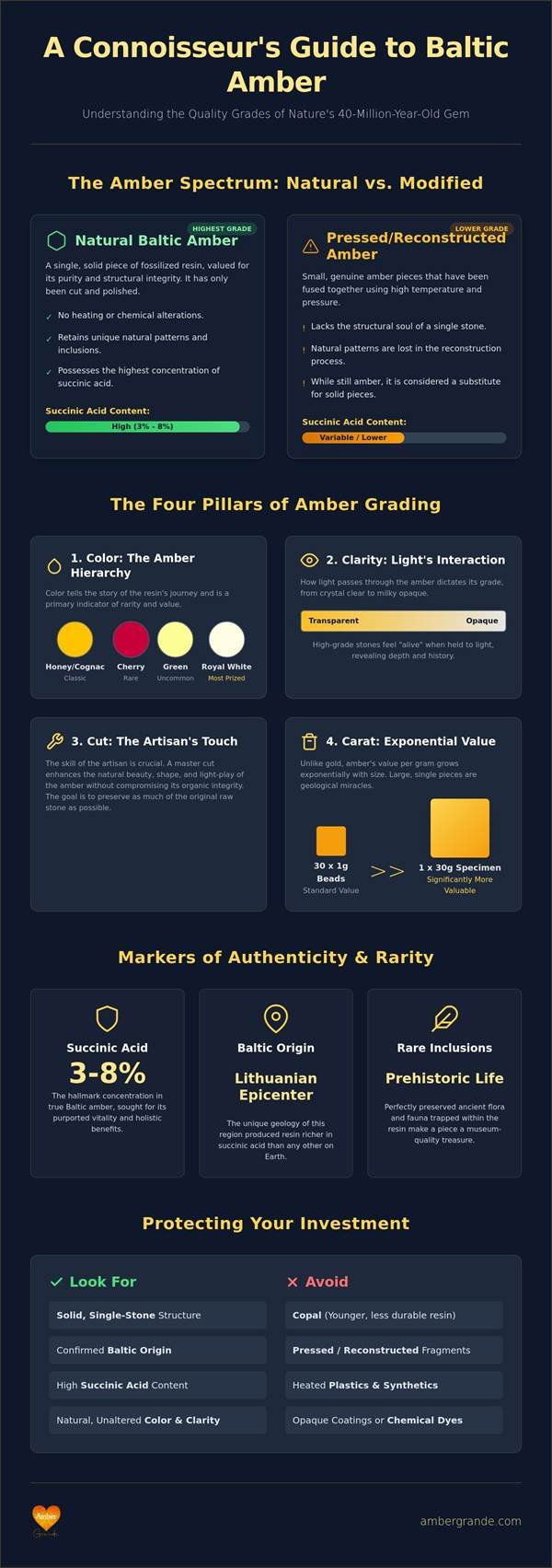
Unlike diamonds or rubies, amber is organic. Its quality starts with physical integrity. The highest Baltic amber quality grades belong to “natural” stones. These are solid pieces that have only been cut and polished, never heated or chemically altered. They retain the highest concentration of succinic acid, typically between 3% and 8%. This chemical compound is the hallmark of true Baltic succinite, often sought for the vitality it brings to the wearer.
Visual appeal also dictates the grade. We look at how light interacts with the resin. Is it transparent like honey, or opaque like ancient bone? A high-grade stone should feel “alive” when held to the light. Lower grades often include “pressed” amber, where small pieces are fused together. While these are still real amber, they lack the structural soul and unique patterns found in a single, solid stone. For those selecting kids necklaces or adult necklaces, knowing the difference between a solid stone and a reconstructed one is vital for both durability and peace of mind.
The Heritage Factor: Why Baltic Origin Matters
The Baltic Sea region, especially around Lithuania, is the heart of the amber world. This isn’t just a matter of geography; it’s a matter of geological destiny. The specific conditions of Baltic amber formation during the Eocene epoch created a resin richer in succinic acid than any other variety on Earth. This unique composition is why Baltic specimens are prized above those from the Dominican Republic or Mexico.
Lithuanian craftsmanship plays a crucial role in preserving this quality. For centuries, the Amber Road connected our shores to the Roman Empire, trading this “gold” for silver and silk. Today, our artisans honor that lineage. They understand that the “spirit” of the work lies in respecting the material’s natural state. By choosing amber of confirmed Baltic origin, you’re supporting a heritage that has flourished for millennia. It’s a commitment to authenticity that ensures your precious jewelry isn’t just a beautiful accessory, but a piece of Lithuanian history you can hold in your hand.
The Four Pillars of Amber Grading: Color, Clarity, Cut, and Carat
Understanding Baltic amber quality grades requires looking beyond the surface. It’s a dance between nature’s millions of years and the artisan’s steady hand. We evaluate these treasures through four specific lenses: Color, Clarity, Cut, and Carat. While traditional gemstones follow strict industrial rules, amber grading is more organic. It rewards the soul of the stone. For those investing in precious jewelry, the weight and integrity of a solid stone are the first indicators of its heritage status.
Size changes everything in the Baltic market. Unlike gold, where the price per gram stays relatively stable, amber’s value grows exponentially with weight. A single, solid 30-gram specimen is significantly more valuable than thirty individual 1-gram beads. This is because finding large, inclusion-free pieces that survived the shifting earth is a geological miracle. When you hold a heavy, high-grade piece, you aren’t just holding resin. You’re holding a rare survivor of an ancient world.
The Color Hierarchy: From Honey to Cherry
Color tells the story of the resin’s journey. Honey and cognac hues are the beloved classics, radiating a familiar warmth that most people associate with the Baltic. However, “Royal White” amber sits at the top of the rarity scale. Historically reserved for nobility, its creamy, opaque texture is caused by millions of microscopic air bubbles trapped within. You’ll also see deep cherry or rare greens. Be cautious with vibrant greens; these are often achieved through modern thermal treatments in an autoclave rather than natural geological pressure. Genuine green amber is subtle, earthy, and exceptionally rare in Lithuania’s artisan markets.
Transparency vs. Cloudiness
Don’t assume that clear stones are always superior. In the world of amber, “bone” or “milky” varieties are often more prized due to their high succinic acid content and rarity. Transparent amber allows you to see deep into the stone’s heart, sometimes revealing “sun spangles.” These are tiny, circular fractures that catch the light like glitter. While beautiful, large spangles can sometimes be a sign of heat treatment used to “clarify” a cloudy stone. A connoisseur looks for the balance between natural cloudiness, often called “bastard” amber, and the clarity that allows the stone to glow from within.
Finally, we look at the cut. A master artisan doesn’t just shape the stone; they listen to it. The goal is to maximize light refraction without sacrificing the stone’s natural “skin” or weight. A poorly executed cut can dull the natural luster, while a skilled one brings out the hidden fire. Whether it’s the smooth curves of beads for kids bracelets or the sharp facets of a statement pendant, the cut is the final signature of quality. It’s the bridge between raw nature and refined elegance.
Authentic vs. Synthetic Amber: How Grading Protects Your Investment
Finding a piece that resonates with your spirit is only half the journey. The other half is ensuring that your treasure is a genuine product of the Earth. In the market, Baltic amber quality grades act as a shield for your investment. They help you navigate the murky waters where high-quality heritage pieces sit alongside clever imitations. Whether you’re looking for kids necklaces or adult necklaces, the grade tells you if you’re buying a million-year-old fossil or a modern synthetic. Professional grading is the only way to be certain that the stone contains the succinic acid required for true wellness jewelry.
Beyond the natural variations, we often encounter “Copal.” This is a younger tree resin, often just a few thousand to a million years old. It lacks the hardness and the potent chemical signature of true Baltic succinite. It’s much softer and can even melt or become sticky if handled too much. Then there are the outright fakes: phenolic resins, glass, and modern plastics. These materials may look the part, but they lack the organic warmth and the unique energetic vibration that defines authentic amber. They’re cold to the touch and offer none of the historical or holistic value of the real stone.
Natural vs. Pressed: The Hidden Grade
This is a nuance many buyers miss. Both “Natural” and “Pressed” (reconstructed) amber are technically made from real Baltic resin. However, they occupy very different rungs on the quality ladder. Natural amber is a single, solid stone. It’s the gold standard of authenticity. Pressed amber is created by fusing small fragments together under high heat and pressure. While it is real amber, the process often alters the natural structure and can diminish its value. You can often spot these reconstructed pieces by looking for “flow lines.” These are small, swirling patterns where the fragments met during the pressing process. Solid stones maintain a more chaotic, organic internal world that hasn’t been forced into a mold.
Essential Authenticity Tests for Buyers
- The Saturated Salt Water Test: Real amber is surprisingly light. In a glass of water with about three tablespoons of dissolved salt, genuine amber will float. Plastic and glass will sink like stones because they’re far denser than organic resin.
- The Static Test: Rub the stone vigorously against a piece of wool or silk for 20 seconds. Authentic amber becomes electrostatically charged; it’ll pick up small bits of paper or hair. Most plastics won’t react with the same intensity.
- The Rub Test: This is the most sensory method. Warm the stone by rubbing it in your palms until it heats up. It should release a faint, pleasant scent of pine or resin. Synthetics will either smell like burnt chemicals or have no scent at all.
By using these tests and understanding the hierarchy of grades, you protect the integrity of your collection. You aren’t just buying a bead; you’re preserving a piece of Lithuanian heritage. Don’t settle for “amber-like” when you can have the genuine spirit of the North.
Evaluating Rarity: The Role of Inclusions and Succinic Acid
True rarity in the Baltic world isn’t always found in flawless transparency. Sometimes, the highest Baltic amber quality grades are awarded to stones that contain a messy, prehistoric story. We look at inclusions; tiny windows into the Eocene epoch; and the concentration of succinic acid to determine a piece’s spiritual and physical worth. While a clear stone is beautiful, a stone that carries ancient life or a thick, acid-rich cortex offers a different level of connection to the Earth’s history. These “imperfections” are the fingerprints of nature, proving that your piece has remained untouched by synthetic labs for millions of years.
The “spirit” of a stone is often found in these unique characteristics. A connoisseur understands that a perfectly clear, mass-produced bead lacks the soul of a raw, inclusion-rich specimen. In 2026, the market has seen a surge in demand for these organic markers. Collectors aren’t just looking for jewelry; they’re looking for a fragment of the past that resonates with their own journey toward vitality. This shift toward naturalism has redefined what we consider “top grade,” placing a higher value on the stone’s original, raw state.
The World Within: Grading Inclusions
Inclusions are nature’s time capsules. When grading these pieces, we look at both the rarity of the trapped organism and the clarity of its preservation. Common inclusions like gnats, flies, or bits of oak moss are beautiful and accessible. However, rare finds like feathers, lizards, or specific prehistoric blossoms can elevate a stone to museum-grade status. The position of the inclusion matters too; it should be visible enough to be admired without compromising the stone’s structural integrity. Inclusion Grade is a measure of biological rarity and visual accessibility.
Wellness Grading: Succinic Acid Content
For many, the true value of Baltic amber lies in its “healing grade,” which is dictated by succinic acid. This natural compound is most concentrated in the “cortex” or the outer layer of the raw stone. When amber is heavily polished to a high-gloss finish, some of this beneficial layer is removed. This is why raw or “semi-polished” beads are often preferred for wellness needs, particularly for kids necklaces and bracelets. The warmth of the skin helps release these trace amounts, fostering a sense of inner peace and balance.
We’ve found that the synergy between amber and other natural elements can amplify these benefits. By combining the traditional potency of Lithuanian succinite with the focused energy of earth-born minerals, you create a piece that serves both the body and the spirit. If you’re looking to deepen your holistic practice, you can explore our specialized Amber and Crystals collection to find a grade that aligns with your personal wellness goals. Whether you choose a raw, high-acid piece for vitality or a rare inclusion for its historical lineage, you’re participating in a tradition that spans forty million years.
Choosing the Right Grade for Your Amber Grande Collection
Selecting the perfect piece is about aligning your intention with the stone’s energy. Now that you understand the intricacies of Baltic amber quality grades, you can choose with confidence. It’s about finding the balance between the raw power of nature and the refined beauty of artisan craft. Whether you’re seeking a gentle companion for a child or a sophisticated heirloom for yourself, the grade you select should reflect the purpose it will serve in your life. Intention matters. When you choose a piece for a child, you’re often looking for the soothing embrace of the Earth’s ancient resin, which is why raw, unpolished beads are such a popular choice.
Buying amber online in 2026 requires a discerning eye. Look for detailed descriptions that specify whether the stone is natural or reconstructed. Authentic Lithuanian boutiques will always be transparent about these details. Trust your intuition when viewing the textures and colors. A high-quality grade will have a depth and warmth that fakes simply cannot replicate. By prioritizing heritage and authenticity, you ensure that your investment supports traditional craftsmanship while bringing genuine vitality into your home.
Matching Grade to Purpose
Daily wear pieces should be durable yet soul-stirring. For Kids Necklaces and Kids Bracelets, we recommend “Grade A” raw or semi-polished beads. These retain the highest concentration of succinic acid, which is released by the warmth of the skin. They’re designed for life’s little moments, offering a grounded connection to nature. For adults, Adult Necklaces and Precious Jewelry often lean toward higher clarity or rare color variations like Royal White or deep Cognac. These heirloom-quality pieces are meant to be passed down through generations, carrying your story within their golden depths.
If you’re seeking a more complex energetic profile, our Amber And Crystals Collection offers a unique synergy. By pairing specific Baltic amber quality grades with the focused vibrations of earth-born crystals, we create jewelry that balances both aesthetic beauty and spiritual harmony. It’s a modern way to wear ancient wisdom, perfect for those who view their jewelry as a partner in their wellness journey.
The Amber Grande Quality Promise
We believe that every piece of amber should be as unique as the person wearing it. Our commitment to authentic, Lithuanian-sourced Baltic amber ensures that you receive only the finest succinite, harvested and polished with respect for its 40-million-year lineage. We carefully curate each collection to ensure maximum vibrancy and structural integrity. You aren’t just a customer to us; you’re a participant in a shared journey toward elegance and peace. We invite you to Discover our collection of handcrafted, authentic Baltic amber jewelry and find the piece that speaks to your spirit today.
Embrace the Timeless Spirit of Lithuanian Amber
You now possess the wisdom to distinguish a true geological marvel from a common imitation. By understanding the nuances of Baltic amber quality grades, you’ve moved beyond being a consumer to becoming a true participant in this ancient heritage. You know that whether it’s the milky depth of Royal White or the raw energy of a high-acid cortex, every stone tells a story of forty million years. This knowledge protects your investment and ensures that the piece you choose resonates with your personal journey toward wellness and elegance.
We invite you to honor this connection through our handcrafted artisan pieces. Our specialized wellness collections and precious jewelry are born from a deep respect for our authentic Lithuanian heritage. Every bead and facet is a testament to the spirit of the Baltic. Explore the Amber Grande Collection of Authentic Baltic Jewelry to find a treasure that brings balance and vitality to your life. Your journey with the Gold of the North is just beginning, and we’re honored to be your guide.
Frequently Asked Questions
What is the highest quality grade of Baltic amber?
The highest quality grade is Natural Baltic Amber (Succinite) that has undergone only mechanical treatment like grinding, cutting, or polishing. This grade ensures the stone’s physical properties and chemical composition remain completely unaltered. Because it’s a solid, single stone from the Earth, it retains the maximum amount of succinic acid and the unique energetic vibration that connoisseurs seek for both investment and wellness.
Is cloudy amber less valuable than transparent amber?
Cloudy amber is often more valuable than transparent varieties because of its rarity and high succinic acid content. Specifically, “Royal White” or “Bone” amber is highly prized in Lithuania and international markets. The cloudiness is caused by millions of tiny air bubbles trapped during fossilization. While clear honey amber is classic, the unique textures found in opaque Baltic amber quality grades often command a higher price.
How can I tell the difference between authentic and synthetic amber at home?
You can use the saltwater test by dissolving about three tablespoons of salt in a glass of water. Authentic amber will float, while most plastics and glass imitations will sink immediately. Another reliable method is the scent test. If you rub the stone vigorously against your palm until it warms up, it should release a faint, pleasant smell of pine resin. Synthetics usually smell of chemicals or nothing at all.
Does the color of the amber affect its healing properties or quality?
Color primarily dictates rarity and aesthetic value, but it does correlate with succinic acid levels. Opaque and milky varieties often contain a higher concentration of this beneficial compound compared to highly clarified transparent stones. While all genuine Baltic amber provides holistic benefits, choosing a grade with a visible “cortex” or a more natural, unheated color ensures you’re receiving the most potent vitality from the stone.
What is “Pressed Amber” and is it considered high quality?
Pressed amber, also known as reconstructed amber, consists of small fragments fused together under high temperature and pressure. While it’s technically real Baltic resin, it sits at a lower rung of Baltic amber quality grades compared to natural stones. It’s often used for more affordable jewelry, but it lacks the structural integrity and unique internal world of a single, solid specimen that has remained untouched for millions of years.
Why is Baltic amber more valuable than amber from other regions?
Baltic amber is uniquely valuable because it contains a high concentration of succinic acid, typically ranging from 3% to 8%. Other resins, like Dominican or Mexican amber, lack this specific chemical signature. Additionally, the 40 million year fossilization process in the Baltic region creates a harder, more durable gem. This combination of geological age and chemical potency makes it the gold standard for both collectors and wellness practitioners.
Do inclusions always make an amber piece more expensive?
Inclusions generally increase a piece’s value, but the final price depends on the rarity and clarity of what’s trapped inside. A common gnat or bit of oak moss adds a modest premium, while rare fauna like a lizard, a feather, or an intact prehistoric blossom can push the price into the thousands of euros. The visual accessibility of the inclusion within the stone also plays a significant role in its final grading.
How does the grade of amber affect the price of kids necklaces?
The price for kids necklaces is influenced by whether the beads are “Natural” solid stones or “Pressed” fragments. Natural, raw beads are often more expensive because they require larger pieces of high quality rough amber to produce and they retain more succinic acid. While polished beads are beautiful, many parents in Lithuania prioritize raw grades for their potent wellness properties, even if they carry a slightly higher artisan price point.